
Introduction: The AI Revolution in Construction
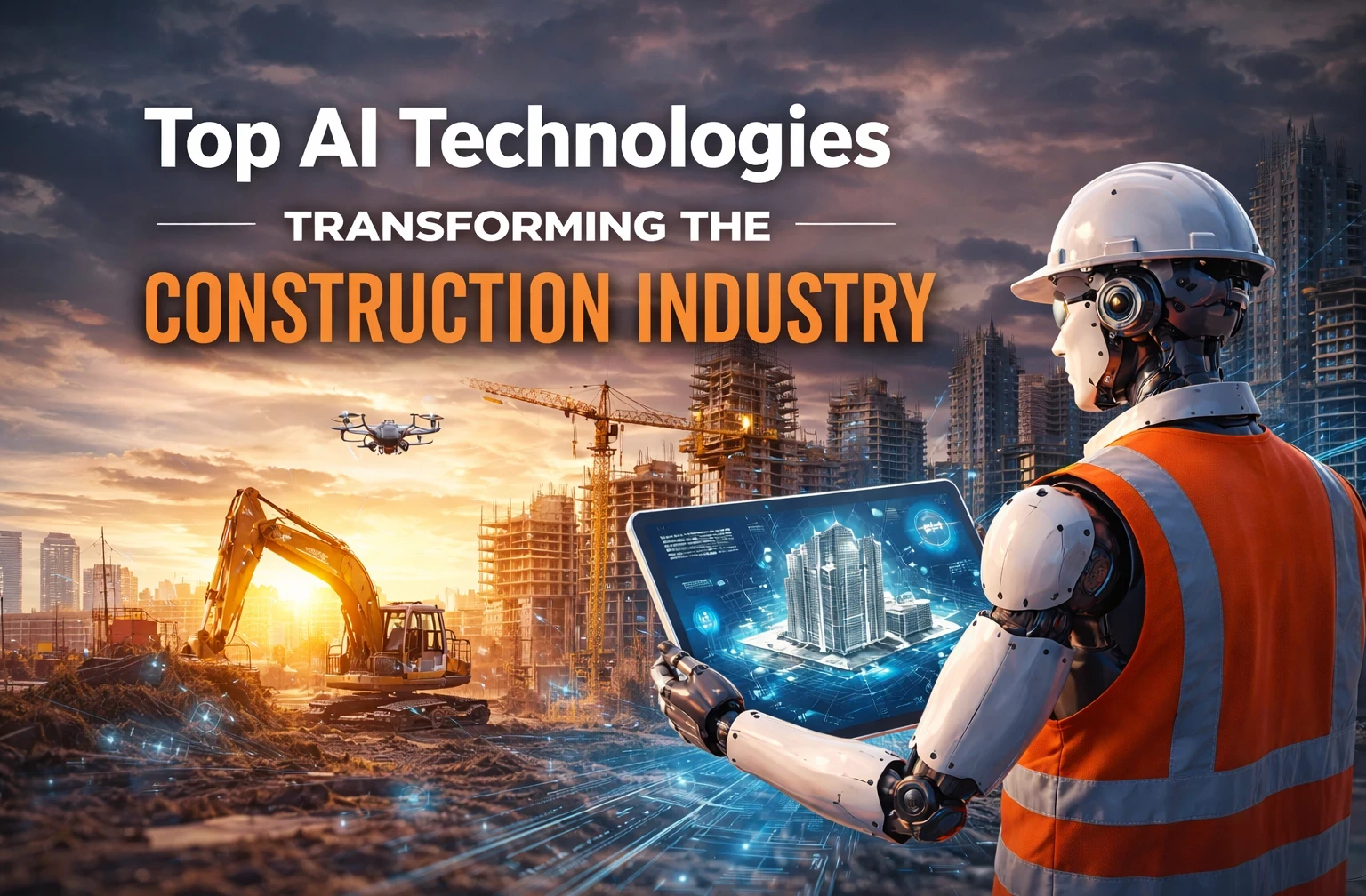 The construction industry, long perceived as traditional and labor-intensive, is undergoing one of the most significant technological shifts in its history. Artificial Intelligence (AI) is no longer a futuristic concept reserved for Silicon Valley startups; it is actively reshaping how buildings are designed, constructed, monitored, and managed. From predictive analytics engines that analyze thousands of project variables to autonomous machinery that operates with minimal human input, AI technologies are redefining productivity, safety, accuracy, and profitability in construction.
The significance of AI lies in its ability to process massive volumes of structured and unstructured data—blueprints, contracts, schedules, cost sheets, drone footage, IoT sensor feeds—and convert them into actionable insights. Machine learning models are trained using historical project data, including cost overruns, delay patterns, weather impacts, labor productivity metrics, and procurement cycles. Over time, these systems learn patterns and improve forecasting accuracy. While the benefits include reduced rework, improved timelines, enhanced safety, and optimized resource allocation, challenges such as high implementation costs, workforce adaptation, and data standardization remain real considerations. However, the trajectory is clear: AI is becoming foundational to modern construction management.
1. Drones: Surveying and Monitoring From Above
Drones equipped with AI-powered imaging systems are revolutionizing site surveying and inspection processes. Traditionally, land surveys required days of manual measurement using total stations and GPS equipment. Today, AI-enabled drones capture high-resolution aerial imagery and LiDAR scans within hours. These images are processed using computer vision algorithms that stitch thousands of photos into accurate 3D terrain models. The AI software identifies elevation changes, material stockpiles, boundary lines, and structural deviations with centimeter-level accuracy.
For example, when a drone scans a 10-acre site, photogrammetry software uses machine learning to convert overlapping images into orthomosaic maps. The system compares current site progress with BIM (Building Information Modeling) data to detect discrepancies in excavation depth or foundation alignment. If the AI detects that a section is excavated 15 cm deeper than planned, it immediately flags it in the project dashboard. This real-time monitoring significantly reduces rework and improves quality control. Studies show drone-based site surveys can reduce surveying costs by up to 50% and compress timelines by nearly 70%, especially in large infrastructure projects.
2. Robotics: Automating the Construction Site
Robotics is introducing unprecedented precision and consistency to construction activities. Robotic bricklaying machines such as those developed by companies like Construction Robotics can lay thousands of bricks per day with millimeter-level accuracy. These machines use AI algorithms combined with laser-guided positioning systems to analyze CAD drawings and place bricks according to programmed layouts.
The AI component works by translating digital architectural plans into machine instructions. Data from BIM files is uploaded into the robotic system, which then calculates optimal placement patterns and mortar application thickness. Sensors continuously measure alignment and pressure to ensure structural stability. If a deviation occurs, the robot automatically recalibrates.
Robotics also extends to autonomous rebar tying, concrete finishing, and 3D concrete printing. While there is concern about job displacement, the reality is that robotics shifts human labor toward higher-skilled roles such as programming, supervision, and system optimization. Instead of replacing workers, AI-driven robotics enhances productivity and reduces fatigue-related errors.
3. AI-Powered Design and Planning: Building Smarter
AI-powered generative design tools are transforming architectural and structural planning. Platforms like Autodesk integrate AI within BIM systems to analyze thousands of design permutations based on constraints such as budget, sunlight exposure, wind load, structural efficiency, and sustainability targets.
Here is how it works: architects input design parameters—plot size, zoning regulations, maximum height, cost ceiling, material constraints—and the AI engine runs simulations using optimization algorithms. It evaluates structural loads, energy performance, and spatial efficiency. Within minutes, it generates multiple viable design alternatives ranked by performance metrics. Machine learning models trained on previous projects further refine recommendations by identifying what designs historically resulted in fewer change orders or better cost control.
For example, AI can recommend adjusting column spacing to reduce steel consumption by 8% while maintaining structural integrity. Predictive analytics also estimates labor hours required for specific design choices. This enables stakeholders to make data-driven decisions early in the planning phase, reducing downstream risks.
4. Predictive Analytics: Foreseeing Construction Challenges
Predictive analytics uses historical and real-time data to forecast potential delays, cost overruns, and supply chain disruptions. AI models are trained using thousands of previous project datasets containing variables such as weather conditions, labor productivity rates, subcontractor performance records, and procurement lead times.
For example, if historical data shows that projects with more than five concurrent subcontractors experience a 20% higher risk of coordination delays, the AI system flags similar risk patterns in new projects. Machine learning algorithms like gradient boosting or neural networks calculate probability scores for cost overruns. If a project shows a 65% probability of delay due to material shortages, procurement teams receive early alerts.
Some AI systems can read and analyze contract documents using Natural Language Processing (NLP). The documents are digitized and fed into models trained to detect risk clauses, payment terms, penalty provisions, and ambiguous language. Accuracy levels often exceed 90% in structured contract environments, significantly reducing legal disputes and misinterpretation.
5. AI in Construction Safety: Ensuring Worker Wellbeing
Safety remains one of the most critical aspects of construction. AI-driven computer vision systems analyze live CCTV feeds to detect unsafe behaviors such as workers not wearing helmets or entering restricted zones. These systems are trained on thousands of labeled images where safety compliance and violations are annotated. The neural networks learn to recognize protective equipment, hazard zones, and risky postures.
For instance, if a worker enters a high-risk area without a reflective vest, the AI model detects the absence of required PPE and triggers a real-time alert to supervisors. Wearable devices equipped with IoT sensors monitor heart rate, body temperature, and location. If abnormal patterns are detected—such as heat stress—the system sends immediate notifications.
Companies implementing AI-based safety monitoring have reported measurable improvements, including a reduction in recordable incidents by up to 25%. By leveraging predictive analytics, AI can also identify patterns such as increased accident probability during overtime shifts, enabling proactive schedule adjustments.
6. Smart Building Materials: The Role of AI in Innovations
AI is playing a pivotal role in developing smart and sustainable building materials. Researchers use machine learning models to analyze chemical compositions and performance metrics of materials under different environmental conditions. For example, AI algorithms help design self-healing concrete by predicting optimal combinations of bacteria and binding agents that seal cracks when exposed to moisture.
Data from laboratory tests—compressive strength, curing time, temperature resistance—is fed into predictive models. The AI evaluates millions of combinations to identify the most durable and cost-effective formula. Similarly, smart glass technologies use AI to adjust transparency based on sunlight intensity, improving energy efficiency in commercial buildings.
By integrating AI in material research, companies accelerate innovation cycles and reduce experimental costs. The result is more sustainable construction practices and reduced carbon footprints.
7. AI in Project Management: Streamlining Operations
AI-powered project management platforms analyze scheduling data, workforce allocation, and financial performance in real time. Tools like Procore integrate machine learning algorithms to monitor progress against baseline schedules. The AI continuously recalculates critical paths when delays occur.
For example, if rain disrupts foundation work for three days, the system automatically reschedules dependent activities and calculates the impact on overall deadlines. It recommends resource reallocation to maintain timeline targets. Natural Language Processing modules can also summarize daily site reports and convert unstructured notes into structured insights.
Dynamic dashboards provide predictive cash flow analysis by correlating milestone completion percentages with billing cycles. This enhances accountability and decision-making transparency, significantly improving operational efficiency.
8. Autonomous Equipment: Rethinking Construction Machinery
Autonomous construction equipment integrates AI, GPS, LiDAR, and advanced sensors to perform repetitive tasks with minimal human intervention. Companies like Caterpillar Inc. have developed semi-autonomous bulldozers and excavators capable of executing pre-programmed grading plans.
The process begins by uploading digital terrain models into the machine’s onboard computer. AI algorithms interpret the design and control hydraulic systems to achieve precise excavation levels. Sensors continuously measure blade angle and soil resistance, adjusting movements in real time. Productivity gains can exceed 20% due to consistent performance and reduced downtime.
While adoption challenges include regulatory approvals and workforce training, the potential for increased safety and efficiency makes autonomous equipment a defining trend in large-scale infrastructure projects.
Conclusion: Bridging Tradition and Innovation
Artificial Intelligence is not replacing construction; it is refining and elevating it. From drones and robotics to predictive analytics and autonomous equipment, AI technologies are bridging the gap between traditional craftsmanship and digital precision. The most successful construction firms are those integrating AI strategically—combining human expertise with data-driven intelligence.
The future of construction will be defined by smart systems that anticipate risks, optimize resources, and enhance sustainability. Companies that invest in AI today are positioning themselves at the forefront of an industry transformation that prioritizes efficiency, safety, and innovation. As AI continues to evolve, its role in shaping resilient, intelligent, and sustainable infrastructure will only expand, marking the beginning of a new era in construction technology.